
Our Services
Child Inclusive Mediation (CIM)
Children are often deeply affected by the changes that come with a relationship breakdown.
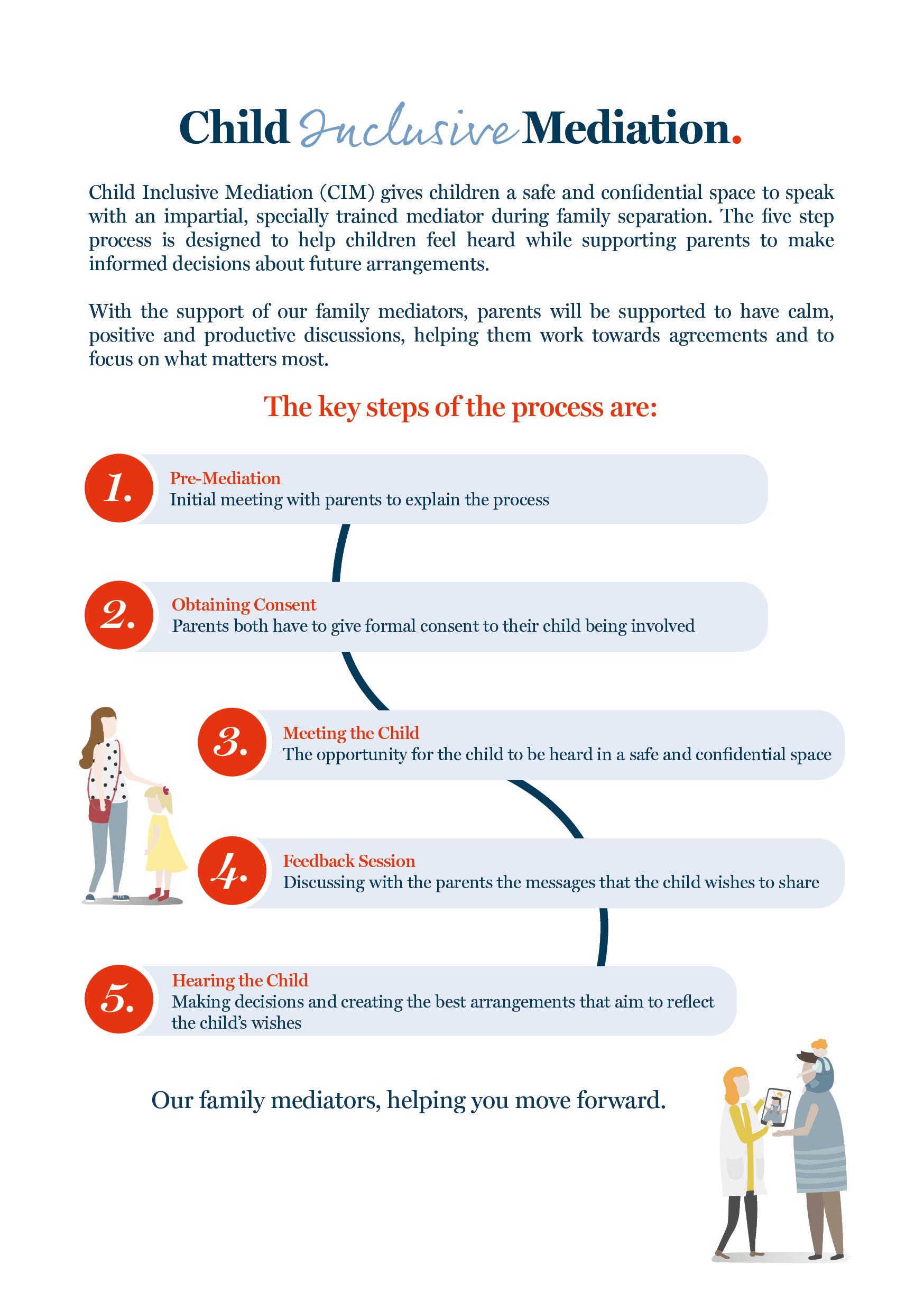
Child Inclusive Mediation (CIM) gives children a safe and confidential space to speak with an impartial, specially trained mediator during family separation. The process helps children feel heard while supporting parents to make informed decisions about future arrangements.
Disagreements about where children live, who they spend time with and how important decisions are made can be difficult for everyone involved, including parents, grandparents and extended family members.
Our family mediators can help you have calm, positive and constructive discussions, working towards agreements or narrowing the issues relating to:
- Child arrangements following separation, including time spent with each parent or
grandparent - Paternity issues
- Name changes
- Schooling
- Relocation, both within the UK and nationally
Mediation provides a supportive and impartial environment in which families can explore concerns openly, consider available options and work towards practical arrangements that prioritise the wellbeing of their children.
Creating a safe and confidential space for children so they feel heard
Key things for parents to know
- Children are supported in a safe and confidential environment
Children can talk openly with an experienced mediator and decide what information, if any, is shared with their parents. - CIM is not about asking children to choose sides
The process is designed to help children express their feelings freely and safely, without pressure or blame. - Parents remain the decision-makers
CIM helps parents better understand their child’s wishes and experiences, but parents continue to make decisions about arrangements. - It is normal for parents to feel anxious
Parents often worry about what their child may say or whether they are being influenced. Mediators are trained to manage these concerns carefully and sensitively.
- Participation is voluntary and explained fully beforehand
An initial meeting with a mediator allows parents to ask questions and understand the process before deciding whether their child should take part. - Children may communicate differently with each parent
This is common during separation. A neutral mediator can help children express themselves honestly and feel understood. - Child Inclusive Mediation is a well-established process
Family mediators have been working directly with children for many years and are specially trained, DBS checked and experienced in safeguarding and family dynamics. - Safety and suitability are carefully assessed
Mediators screen for domestic abuse, high conflict, and power imbalances to ensure CIM is safe and appropriate in each case.
How it all works:
The mediator will discuss with parents individually in the MIAM if CIM is something that they wish to consider.
Thereafter, parents will have a joint meeting with the mediator to discuss in more detail whether CIM is appropriate. Children are then invited to meet separately with the mediator in a safe and relaxed environment.
The mediator will only share information with parents that the child is comfortable sharing, unless there are safeguarding concerns.
Child Inclusive Mediation is generally suitable for children aged 10 and above, although suitability depends on the individual child and family circumstances.


Why CIM can be valuable
Research shows that children often benefit from having the opportunity to speak to an independent professional.
Feeling listened to and understood can help reduce anxiety, improve communication, and support more child-focused outcomes during separation.
If you would like to find out whether child inclusive mediation may be suitable for your family, our mediators can discuss the process with you during an initial meeting.
Why Choose EMG Mediation?
Family mediation services for divorce, children and financial arrangements.
Our mediators are specialist family lawyers with years of experience supporting families through difficult situations with care, clarity and understanding.
With their background in family law, they are well placed to guide constructive discussions around financial matters and arrangements for children in a calm, supportive and confidential environment.
We can help with divorce and financial arrangements, child arrangements, living together agreements, separation, pre or post-nuptial agreements and civil partnerships.
Get started today
Costs
| Service | Cost |
|---|---|
| Child-inclusive mediation session with child fixed fee | £147.50 + VAT |
To enquire or book an appointment, please fill out our contact form or email us at enquiry@emgmediation.co.uk and a member of our team will be in touch.

FAQs
We understand that you may have questions about mediation and the process involved. Below are answers to some of the questions we are asked most often.
Child Inclusive Mediation allows children and young people to have their views heard within the mediation process, helping parents make informed decisions that reflect their child's needs and experiences.
There is no fixed age at which a child can participate in Child Inclusive Mediation. Children are typically around 10 years old or older, but suitability is assessed individually based on the child's maturity, understanding, and willingness to take part.
No. Participation is entirely voluntary and only takes place if the child wishes to be involved and the mediator considers it appropriate.
No. Children are never asked to make decisions or choose between parents during Child Inclusive Mediation. The purpose is simply to give them a safe opportunity to share their views, feelings, and experiences so that parents can make informed decisions.
The mediator will discuss confidentiality with the child and explain what information may be shared. Generally, only information agreed by the child will be fed back, unless there are safeguarding concerns
It can help parents gain a better understanding of their child's perspective, improve communication, and support arrangements that focus on the child's wellbeing.
The mediator will meet with the child in a safe, neutral, and supportive environment. The meeting gives the child an opportunity to talk about their experiences, concerns, and wishes, helping ensure that their voice can be considered within the mediation process.
Yes. Hearing a child's perspective can often help parents move discussions forward and focus on arrangements that are in the child's best interests.
Unsure of your next steps? Our legal mediation experts are here to help.
Complete our enquiry form and a member of our team will respond as soon as possible.